
Vaccine Injury Compensation Program: Your Rights and Options
Vaccine-related injuries, while rare, can create significant physical and financial hardship for those affected. Understanding the Vaccine Injury Compensation Program (VICP) and related compensation systems is essential for patients seeking help after experiencing adverse reactions.
What Is the Vaccine Injury Compensation Program?
The Vaccine Injury Compensation Program (VICP) is a federal no-fault system established in 1988 to provide financial compensation to individuals injured by vaccines recommended for routine administration. This program serves as an alternative to traditional litigation, offering a streamlined path to compensation while protecting vaccine manufacturers and healthcare providers from excessive liability.
The National Vaccine Injury Compensation Program is a no-fault alternative to the traditional legal system for resolving vaccine injury petitions. It was created in the 1980s, after lawsuits against vaccine companies and health care providers threatened to cause vaccine shortages and reduce U.S. vaccination rates, which could have caused a resurgence of vaccine preventable diseases.
How the VICP Works
The Vaccine Injury Compensation Program operates through the U.S. Court of Federal Claims, where Special Masters adjudicate cases. The VICP is a federal program administered by three federal government agencies: Health and Human Services (HHS), the Department of Justice, and the United States Federal Court of Claims (the Court). This judicial process provides greater transparency and due process protections compared to administrative programs.
VICP Coverage and Benefits
The program covers 16 vaccines routinely recommended by the CDC, including:
- MMR (measles, mumps, rubella)
- DTaP (diphtheria, tetanus, pertussis)
- Influenza vaccines
- HPV vaccines
- Pneumococcal vaccines
The types of compensation available to eligible claimants under the VICP include: Compensation for all medical expenses incurred as a result of a vaccine injury; Compensation for other out-of-pocket costs incurred as a result of a vaccine injury; Compensation for loss of income, benefits and future earning capacity; Up to $250,000 in compensation for pain and suffering; and, Funeral, burial and other expenses in cases involving fatal vaccine injuries.
The Countermeasures Injury Compensation Program (CICP)
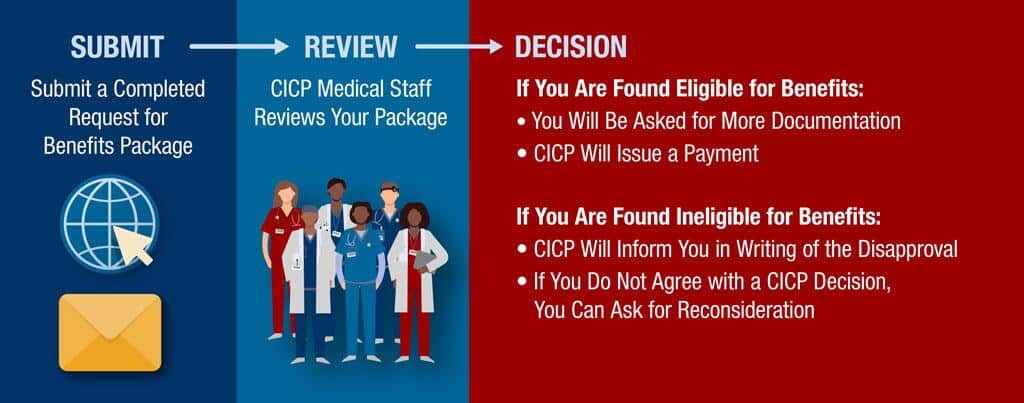
For COVID-19 vaccines and other emergency countermeasures, a separate system called the Countermeasures Injury Compensation Program (CICP) handles injury claims. The CICP ensures coverage for injury or death resulting from the administration or use of certain countermeasures, including medication, devices, or other items used to prevent, diagnose, or treat a public health emergency or a security threat.
Key Differences Between Programs
The Vaccine Injury Compensation Program and CICP differ significantly in their approach and benefits:
VICP Advantages:
- Judicial review process
- Legal representation available
- Compensation for pain and suffering
- Higher approval rates (approximately 40%)
CICP Limitations:
- Administrative process only
- No legal representation provided
- Limited compensation (medical expenses and lost wages only)
- Extremely low approval rates (0.5% for COVID-19 claims)
As of 2021, the VICP approved compensation for approximately 40% (7,807 out of 19,538) of the claims filed. Conversely, only 34 of the 12,205 claims received by the CICP from 2010 until May 1, 2023, were approved, and only four out of 749 COVID-19-related claims receiving final decisions (out of 11,686 claims) as of May 1, 2023, were approved for compensation (compensation rate: 0.5%).
Current Challenges and Reform Efforts
The Vaccine Injury Compensation Program faces significant challenges, particularly regarding COVID-19 vaccine injuries. Despite these vaccines receiving full FDA approval and being added to routine immunization schedules, they remain under the less favorable CICP system.
Despite COVID-19 vaccines receiving full FDA approval and being added to immunization schedules, COVID-19 vaccine claims still remain under the CICP, which has not yet rendered decisions on over 7,700 claims and provided only nominal payouts for the very few approved.
Legislative efforts are underway to address these shortcomings. The Vaccine Injury Compensation Modernization Act would: Shift pending COVID-19 vaccine claims from the CICP to VICP. Reduce case backlog by expanding the number of Special Masters (judges for the VICP) from a ceiling of 8 to a floor of 10 and by permitting Special Masters to serve for multiple terms.
Filing Deadlines and Requirements
Understanding filing deadlines is crucial for anyone considering a claim under the Vaccine Injury Compensation Program:
- VICP: Three years from symptom onset for injuries; two years from death for fatal cases
- CICP: One year from vaccine administration
These deadlines are strict, and missing them eliminates eligibility for compensation. It’s essential to act promptly if you suspect a vaccine-related injury.
When to Seek Legal Guidance
If you’re experiencing symptoms that may be related to vaccination, it’s important to document your condition thoroughly and seek appropriate medical evaluation. For Long COVID patients and those with vaccine-related injuries, comprehensive care addresses the root causes of symptoms rather than just managing individual complaints.
Symptoms like chronic fatigue, brain fog, dysautonomia, and neurological dysfunction require specialized evaluation and treatment. Understanding whether your condition qualifies for compensation under the Vaccine Injury Compensation Program or CICP can provide crucial financial support for ongoing medical care.
The Path Forward
The Vaccine Injury Compensation Program represents an important safety net for those experiencing rare but serious vaccine-related injuries. While the system has limitations, particularly regarding COVID-19 vaccines currently under CICP jurisdiction, ongoing reform efforts aim to improve access to fair compensation.
Your symptoms are real, and there are treatment options available. Whether seeking compensation through the Vaccine Injury Compensation Program or exploring innovative treatments for post-vaccination complications, the key is finding healthcare providers who understand the complex interactions between vaccines, immune function, and neurological health.
Recovery is not a straight line, but every step forward matters. Understanding your rights under these compensation programs is one important piece of your healing journey.
Medical Disclaimer: This content is for informational purposes only and is not intended as a substitute for professional medical advice, diagnosis, or treatment. Always seek the advice of your physician or other qualified health provider with any questions you may have regarding a medical condition.