
Hormone Imbalance in Long COVID
You've Been Told Your Hormones Are "Normal"
Multiple endocrinologists delivering the same answer. Your labs are within range. Yet…
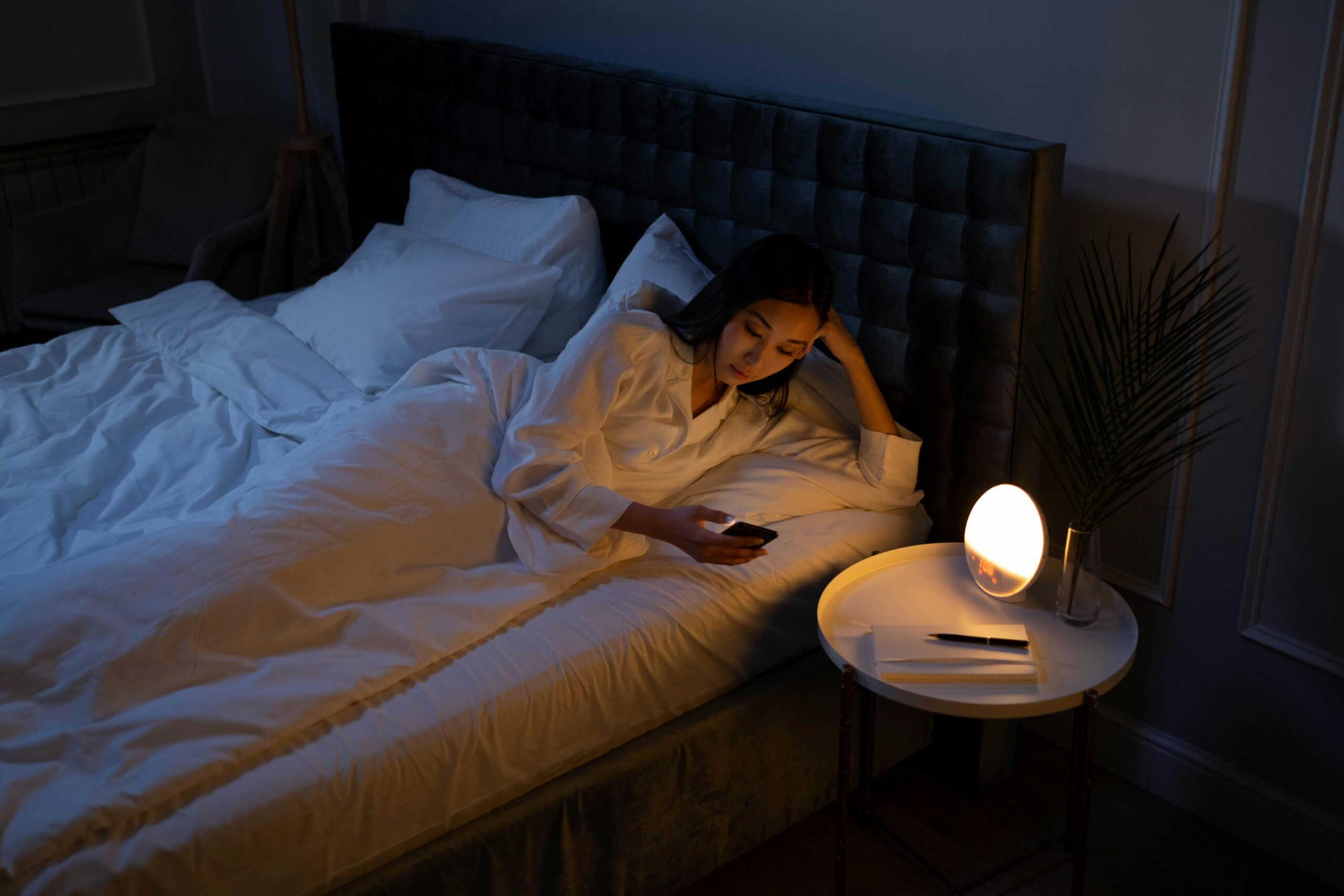
- You wake at 3 AM every night with your mind racing.
- Hot flashes come knocking earlier and earlier.
- Anxiety appears from nowhere.
- Men report losing muscle mass, motivation vanishing, brain fog so thick they can’t work.
Let’s discuss “normal”.
When your estradiol is 45 pg/mL, you’re told it’s normal. For a 38-year-old woman, that’s menopausal levels. When your free T3 is 2.2 (range 2.0-4.4), you’re told your thyroid is fine.
This is the bottom of the range so no wonder you’re exhausted.
Your symptoms are real and caused by hormone dysfunction overlooked by standard.
Call or book an appointment online today
What Is Hormone Imbalance in Long COVID?
COVID doesn’t just affect your lungs, it can disrupt your entire endocrine system through multiple pathways like:
Sex Hormones: Estrogen, progesterone, and testosterone production crashes or becomes erratic. Women develop symptoms mimicking perimenopause regardless of age. Men lose testosterone at rates that would normally take decades. Both experience reproductive chaos such as irregular cycles, erectile dysfunction, complete loss of libido.
Thyroid Hormones: T3 is low because the conversion T4 to active T3 fails. Inflammation blocks your cells from using thyroid hormone properly. Some develop Hashimoto’s thyroiditis, an autoimmune attack on the thyroid triggered by viral infection.
Adrenal Hormones: Cortisol rhythms flip so instead of peaking in the morning and declining at night, cortisol stays elevated or flatlines. DHEA (your resilience hormone), depletes. Your body stays locked in stress response or burns out.
The hypothalamic-pituitary-adrenal (HPA) axis orchestrates all hormone production. When COVID disrupts this axis, every hormone system can fail simultaneously. It’s not psychiatric. It’s not “just stress.” It’s a biological disruption at the cellular level.
Fun fact: Your gut produces hormones too. When gut dysbiosis develops post-COVID, hormone metabolism fails. The bacteria processing estrogen becomes imbalanced, causing estrogen dominance regardless of production levels.
For comprehensive understanding of endocrine disruption in Long COVID, see Dr. Groysman’s book on hormone imbalance and dysregulated metabolism, part of his 7-volume series on Long COVID mechanisms.
How Hormone Imbalance Drives Your Symptoms
Low progesterone affects more than periods. Progesterone activates the brain’s brake pedal or GABA receptors.
Without adequate progesterone…
- You can’t calm down.
- You’re exhausted but wired.
- Sleep becomes impossible because progesterone is what enables deep sleep.
- Anxiety appears from nowhere because your natural anxiolytic is missing.
Estrogen imbalance causes temperature fluctuations. Hot flashes, night sweats, or feeling cold when everyone else is comfortable. Estrogen also affects cognition and when levels drop, memory fails. Estrogen protects cardiovascular function too. Those heart palpitations that come and go? Often estrogen-related.
Testosterone deficiency affects both sexes. Women need testosterone for energy, motivation, and muscle maintenance. When it drops, you lose motivation. Everything feels like too much effort. Men with low testosterone report feeling like “a different person”, depression that SSRIs can’t touch, muscle wasting despite exercise, complete loss of confidence.
Thyroid dysfunction slows metabolism, cognition, digestion, and temperature regulation to a halt. Even with “normal” TSH, if your free T3 is low, every cell lacks energy. Hair falls out. Weight climbs despite eating less. Constipation develops. You’re cold all the time. Brain fog becomes so thick you can’t think clearly.
But here’s what standard medicine misses the mark: Your TSH (thyroid-stimulating hormone) of 3.5 might be “within range,” but optimal is 1.0-2.0. Your testosterone might be “normal for your age,” but if you’re 35 with the testosterone of a 65-year-old, that explains your symptoms.

Why Standard Testing Misses Hormone Dysfunction
Your doctor orders TSH (thyroid stimulating hormone) testing. It’s 2.8. “Normal.” But TSH doesn’t tell you how much active thyroid hormone reaches your cells.
On the other h and, free T3 (the hormone that actually works) isn’t measured. Reverse T3, which blocks thyroid function, isn’t checked.
Antibodies indicating autoimmune thyroid disease are ignored, but because TSH is “normal,” you’re told your thyroid is fine. Standard testing uses reference ranges, not optimal ranges.
Progesterone is rarely tested outside fertility evaluations. Even when tested, timing matters.
Progesterone measured on day 7 will be low, it’s supposed to be. You need day 21 testing to assess luteal phase production. Most doctors don’t specify timing.
Single cortisol draws miss the pattern. Cortisol should follow a specific rhythm (high morning, gradual decline, low at night).
Standard practice? One blood draw at whatever time you arrive at the lab.
Our Comprehensive Hormone Testing
We test what standard medicine ignores.
Complete Thyroid Assessment: TSH, Free T4, Free T3, Reverse T3, TPO and TG antibodies. This comprehensive picture reveals why you’re symptomatic despite “normal” TSH.
Sex Hormone Evaluation: Estradiol, but also estrone and estriol for the complete estrogen picture. Progesterone tested day 19-21 for cycling women, or any time if menopausal. Free and total testosterone because only free testosterone is active. DHEA-S shows adrenal reserve. For men, we add LH and FSH to determine if low testosterone is primary (testicular) or secondary (pituitary).
Adrenal Function: Four-point cortisol testing captures your rhythm. Morning, noon, evening, bedtime either saliva or urine. DHEA paired with cortisol shows adrenal reserve. If indicated, we run ACTH stimulation testing to rule out Addison’s disease. But most Long COVID patients have functional dysregulation, not adrenal failure.
Specialized Markers: Prolactin elevation suppresses sex hormones. Fasting insulin reveals metabolic dysfunction affecting hormone balance. Sex hormone binding globulin (SHBG) determines how much hormone is available. Pregnenolone—the mother hormone—shows whether you have raw materials for hormone production.
Timing matters. We test women day 19-21 for progesterone. Day 3 for baseline hormones. Thyroid testing requires consistency, same time of day, fasting, no biotin supplements for 72 hours. Cortisol follows circadian rhythm, we specify exact collection times.

Why Dr. Groysman's Approach Is Different
Dr. Groysman developed these protocols recovering from his own Long COVID.
Through systematic research and self-treatment, he identified how COVID disrupts hormone systems and developed his restoration protocols. His 7-book series documents this approach, with an entire volume dedicated to hormone imbalance and metabolic dysfunction in Long COVID.
This isn’t about optimizing hormones for anti-aging or performance. It’s about restoring basic function destroyed by viral damage. We treat the mechanism, endocrine disruption, not just individual hormone deficiencies.
Standard endocrinology waits until glands fail. We intervene during dysfunction, before permanent damage occurs. The difference between treating at TSH of 4.5 versus waiting until it hits 10.
We understand mechanism interconnection. Fixing thyroid without addressing gut dysbiosis means poor hormone absorption. Replacing testosterone without managing estrogen conversion causes new problems.
Every hormone affects others which is why treatment must be comprehensive.
Who Benefits from Hormone Optimization
If your periods changed after COVID, hormone dysfunction could be a culprit.
Anyone with persistent fatigue despite “normal” labs. Especially if fatigue worsens despite rest, or if fatigue improves slightly with activity, then crashes again (a classic for combined thyroid and adrenal dysfunction).
Patients with temperature dysregulation. Hot flashes, night sweats, or feeling cold all the time indicate hormone imbalance, not just menopause.
Those with treatment-resistant mood symptoms. Depression that SSRIs don’t touch often stems from low testosterone or thyroid. Anxiety post-COVID frequently relates to progesterone deficiency or cortisol dysregulation.
Men experiencing muscle loss, erectile dysfunction, motivation disappearing. Long COVID can drop testosterone by 50% within months.
If you’ve been told your hormones are “normal for your age” but you feel 20 years older than you are, comprehensive testing reveals what standard panels miss.

Schedule Your Hormone Assessment
If persistent fatigue, menstrual irregularities, temperature dysregulation, or mood changes haven’t responded to standard approaches, schedule a consultation to determine if comprehensive hormone mechanism assessment is appropriate.